MOVING SIGNATURES | THE PILOT: Films and Reflections
THE PROCESS
Seven Artworks. Nineteen Participants. One Collaboration.
MOVING SIGNATURES is now an ongoing long-form, Slow-Art collaboration between CoisCéim Broadreach and IMMA Horizons. Led by Choreographer and Filmmaker Jonathan Mitchell with IMMA Horizons Curator Sundara O’Higgins. The process began with a pilot in 2025 – an opportunity for adults to participate in an immersive dance-making process germinated from direct experience of selected works from IMMA’s exhibition of its permanent collection, ART AS AGENCY, a major three-year display showcasing over 100 artists from the 1960s to the present.
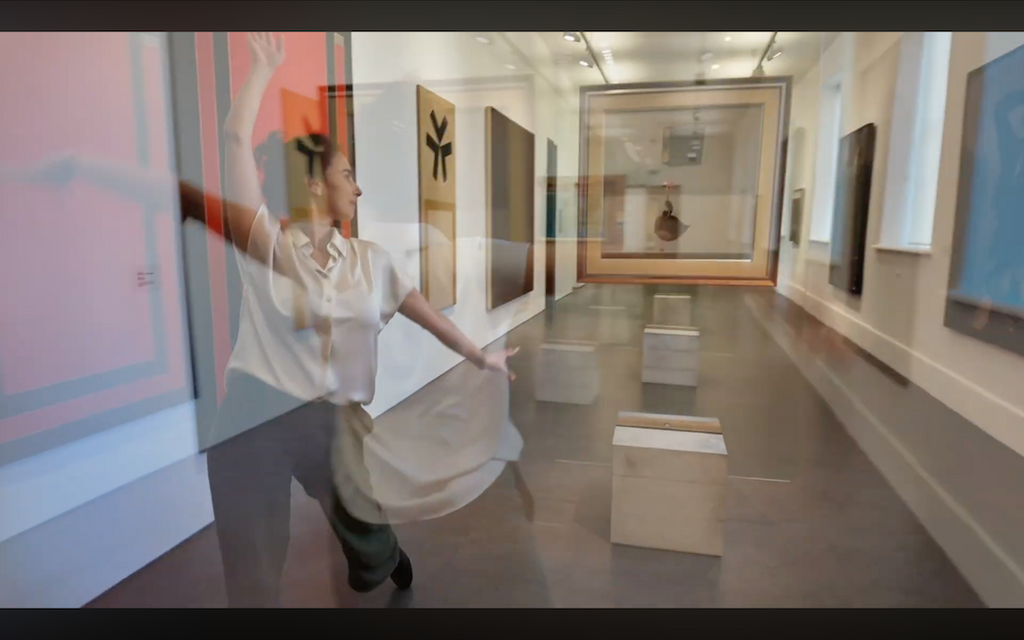
Click on the images below to view a selection of film excerpts.
Developed across a consciously long timeframe, the pilot consisted of four distinct but intertwined components, with the aim of offering an intergenerational, diverse group of participants a new way of interacting with IMMA’s permanent collection as a springboard to exploring art-making through the medium of dance. There was a particular emphasis on facilitating the participants to unearth their own unique movement vocabulary as a means to delve into personal memories and experiences evoked by their responses to seven selected artworks.
The four components were:
One: Slow-Art tours led by Sundara O’Higgins.
These weekly investigations invited participants to engage deeply with a carefully curated selection of artworks from ART AS AGENCY Each session focussed on a single artwork, giving time for close looking, open dialogue and individual interpretation. Participants shaped the experience through shared discussion, dissection and personal response. Time between sessions supported more consideration and evolving reflections on emotional responses to the work.
Two: Initial Physical Response.
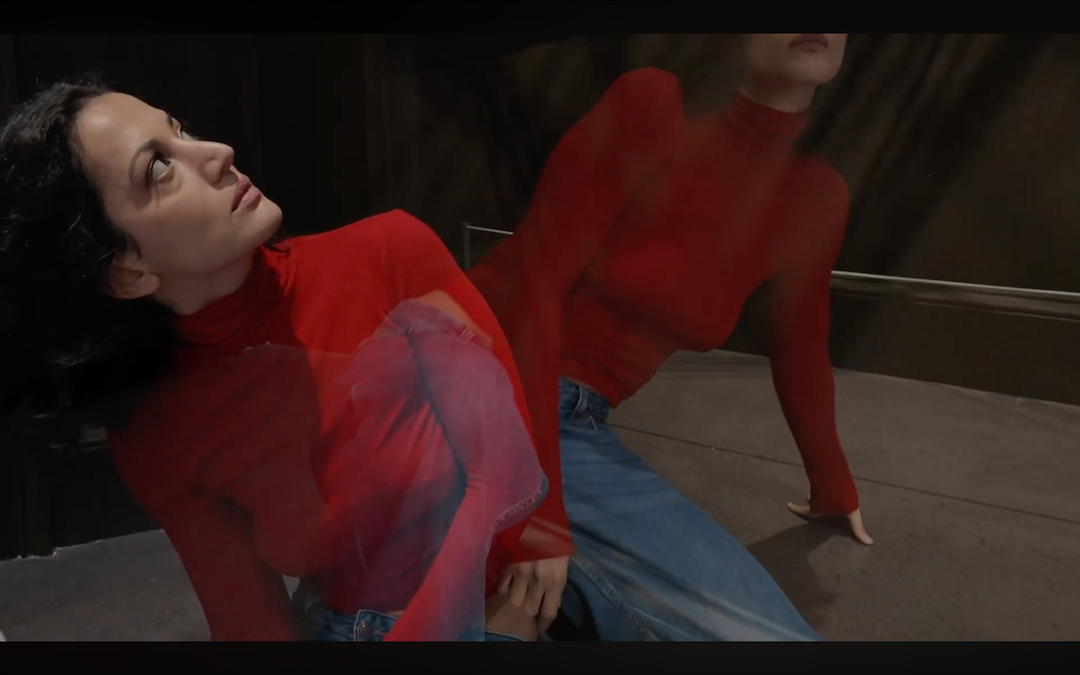
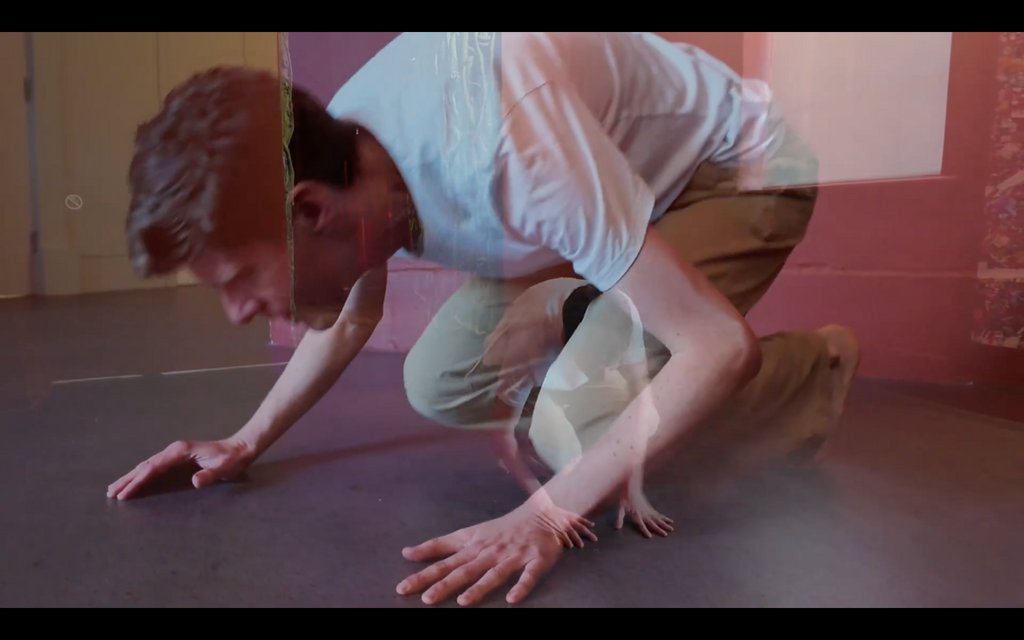
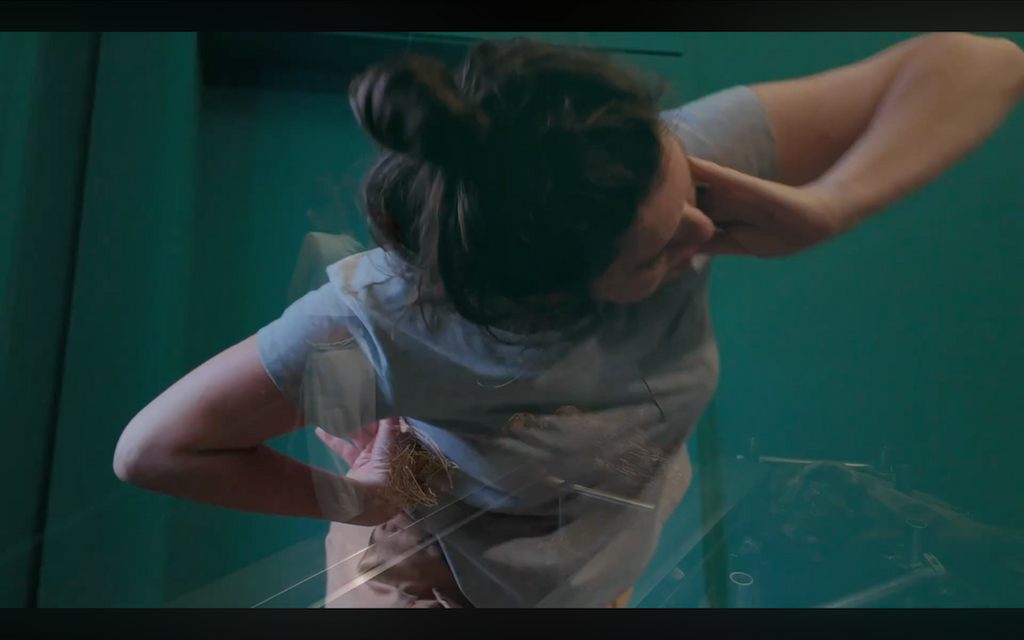
Each participant selected two works from the curated group that resonated most strongly with them. Positioned in direct encounter with these works in the gallery spaces, they were invited to respond physically, spontaneously and undirected, drawing on personal memory, sensation and lived experience. These responses were filmed and later developed by Jonathan Mitchell into a series of short films, with the emphasis on locating and highlighting the choreographic essence of the response within each individual’s movement language.
Three: Choreographic Development.
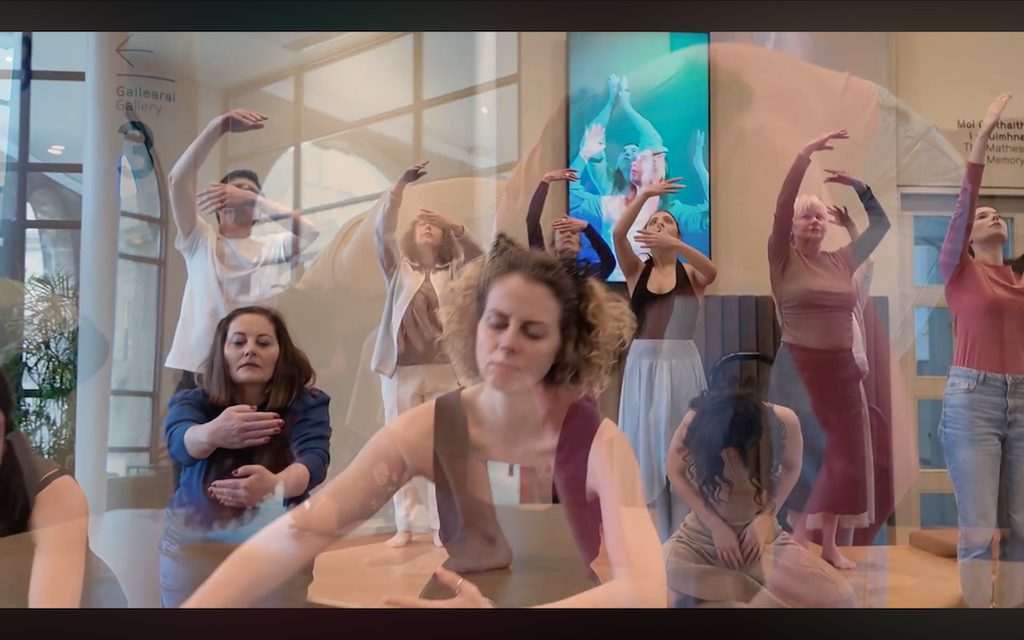
An extended period of studio-based development time. Beginning with the filmed responses as a shared foundation, a choreographic process was created over successive weeks through which participants dug deeper into their own physicality and emotional states, gradually developing a collective movement vocabulary. Towards the end of this process, this material was carefully shaped into a performative structure, enabling participants to articulate and share the embodied responses they had developed in dialogue with the artworks.
Four: Performance.
Returning to IMMA, participants presented the developed work in the main reception area as a weekend afternoon performance. Shared with an open public, the event was encountered both by audiences who arrived intentionally and by visitors passing through the space. The performance was also documented on film.
PERSONAL REFLECTIONS
Jonathan Mitchell, Project Leader.
Dance has a unique capacity for honesty of expression because it is rooted in the body, and the body is a creature of truth.
There are no specialist skills or knowledge required to dance; every child knows this. All you have to do is: first feel; then move.
The body knows things that the mind does not.
Every body is made up not only of its own particular physical geography – the length of a thigh bone, the range of mobility in a hip socket – but also the accumulation of its lived experiences. Our joys, triumphs and tragedies are layered into our muscles and joints; there are stories beneath our skins.
Things the mind forgets, the body remembers.
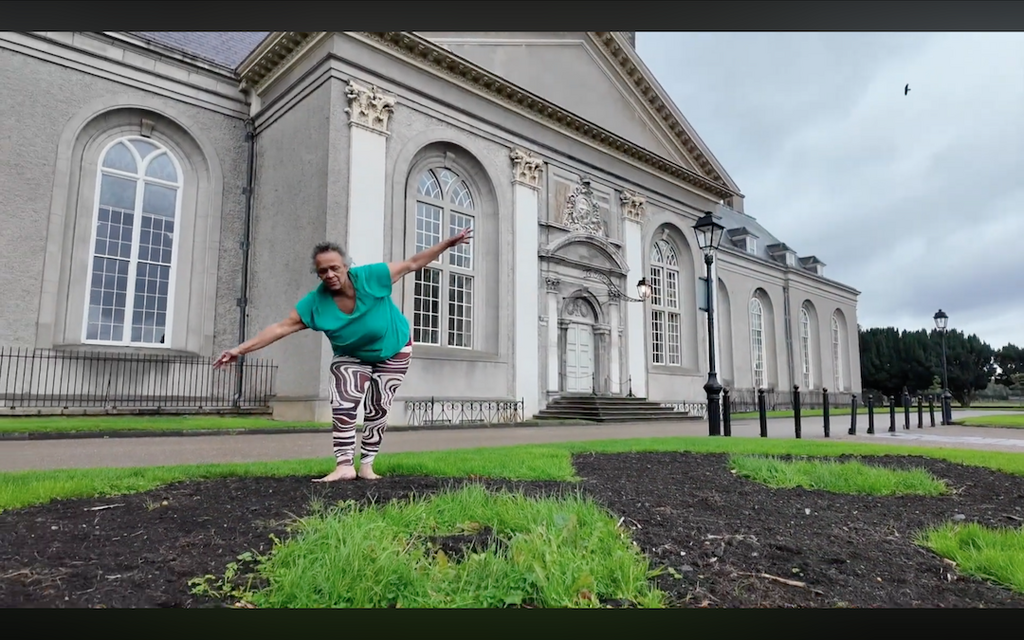
And because every body is a unique palimpsest of all those mundanities and profundities, laid down as sediments in the geology of the fascia, muscle and bone, so, too, is everybody’s physical vocabulary unique. Everyone has their own Moving Signature.
But how to access the richness of this vocabulary?
For trained dancers, the body is the clay in a sculptor’s hand, the notes in a composer’s ear. But to most of us, the body speaks a language of obscurity, the shifting tides of deep emotions.
How to interrogate those undercurrents and bring them to the surface?
In this project, the art would be the doorway in.
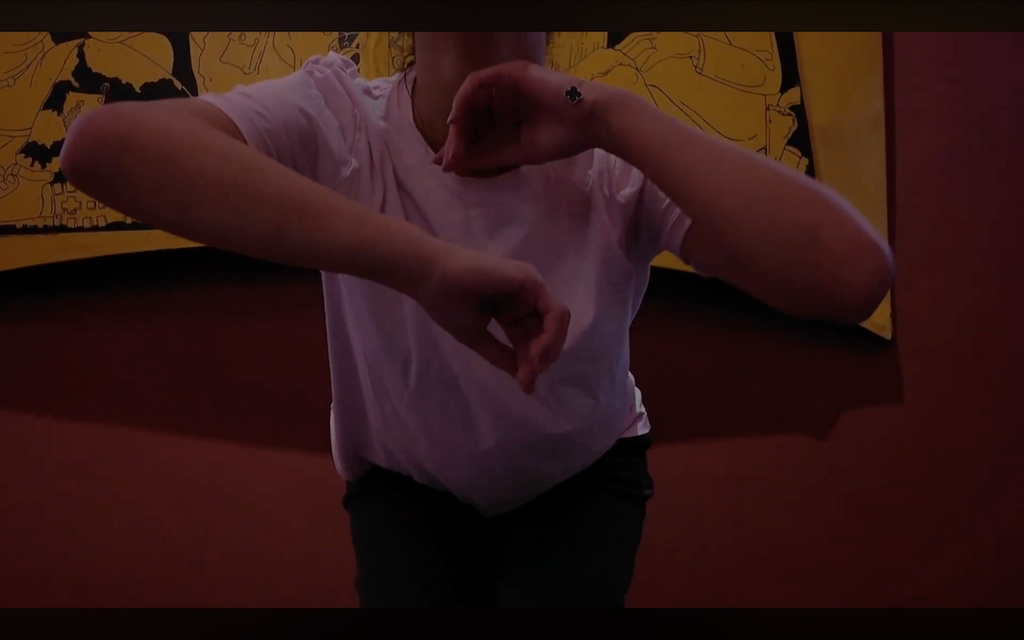
Viewing art is a mirror to our interior lives; it reflects back to us aspects of ourselves that might otherwise have remained unexamined. When we look at art, we see ourselves looking back; our prejudices and fears, our hopes and aspirations.
And it can shine a light into darkened corners; places that we have forgotten or neglected; buried experiences that may be obscured in the conscious mind yet are still present in the body.
These shadowed places are fertile soil for creation, if we approach the task of bringing them to light with a spirit of honest curiosity.
In the point where those two mediums, the visual and the physical, intersect, we found the task: to begin with our emotional responses to the art, to provoke a physical reaction that could unlock an exploration of our own choreographic language.
Nineteen non-professional participants. Seven artworks from the IMMA permanent collection that would be the mirrors into the soul, lighting the path so that we could examine and explore our own thoughts and memories and sensations. The body would be the channel to bring the internal out and manifest it, putting voice to our own lived experiences. Between the two, we would find our Moving Signature.
Time would be the essential component. Time to allow each stage of the process to ripen before moving to the next. Seven artworks would be engaged with, over seven separate weeks, for Slow Art needs time to brew.
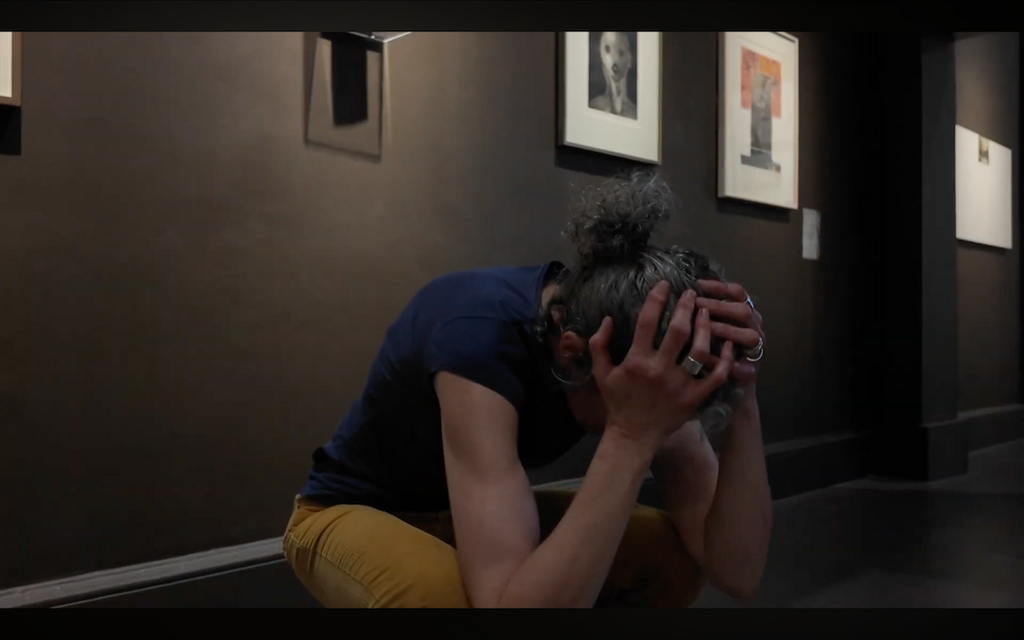
Time first to just look at each piece of art: for the process began with looking. Time to think deeply about what was being seen. Time to feel how those thoughts felt, and time to talk these things out loud, together. Time to listen, to agree, to be contrary.
And between each work, time to go away and listen to oneself.
To ruminate, to settle, to allow all those reflections and urges, thoughts and provocations to filter and mingle and marinade together before moving on to the next.
Next came the beginning of the physical discovery. Each performer selected two artworks – works that spoke to them, provoked them, made them wince or cry out or rejoice – to respond to.
Alone, watched only by the camera.
Spontaneous. Improvisational. Honest. No preparation. No choreography. Stand in front of the artwork. Look. Feel. Remember. Bring all that down into the body, infuse it into the skeleton, the musculature, the air-filled cavities where bone meets bone. Fill the body up with all that sensation, that nuance, those layered depths of slowly accumulated meaning suffusing through the flesh…
Now move.
The camera captured them all. Some hesitant and vulnerable, some wild and unbridled. Some almost completely still, but for the breath and a trembling hand. But all fundamentally committed to truth with a bravery that bordered on recklessness.
And then, more time.
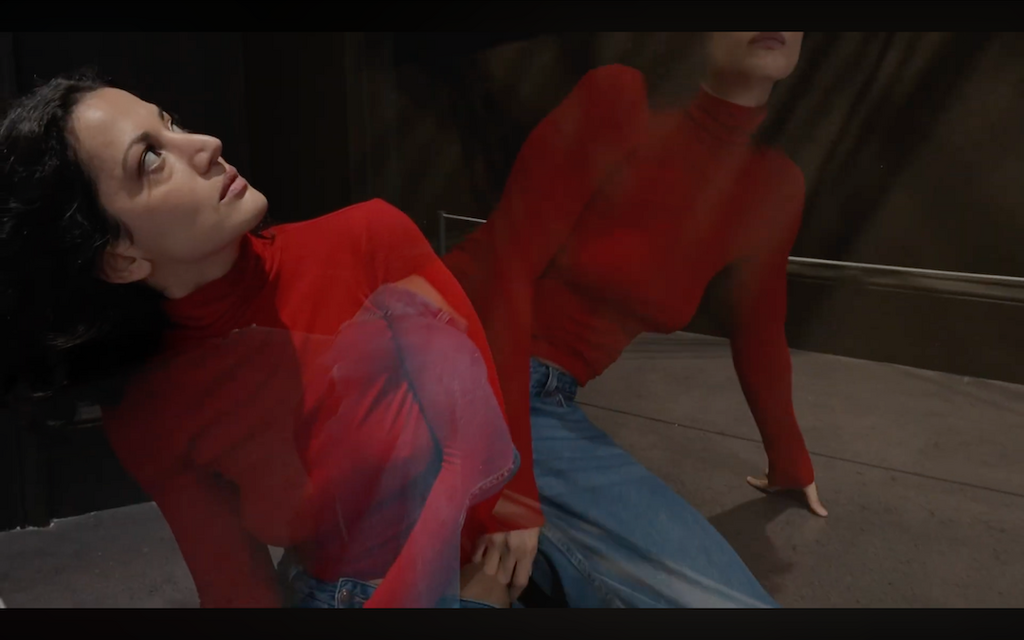
During this hiatus, I edited each participant’s individual response into a short film with an impartial eye that sought to draw out and focus on the choreographic essence of the response. That decisive moment that revealed a flash of truth, a moment of vulnerability, a story to be told.
Although the films were intended as choreographic prompts for the next stage of the process, I find each of them to be profoundly moving.
There is a directness and immediacy to them that is disarmingly tender and real, and I realise, looking at them, how rarely we see truth in performance. Truth shorn of ambition or desire or need, but simply the sense of a person looking back at you from inside the body saying ‘This is part of me. This is who I am.’
They had found their Moving Signatures.
From there we moved into the studio at CoisCéim, and the choreographic phase of the process. It was my strong conviction that the entire project should be process-led rather than product-focused, in order to maximise the richness of the experience for, and allow the participants to dig deeply into the process of making art absent the pressure of producing a final piece.
I conceived my own role not as a choreographer, but as facilitator and guide, creating a space of safety, trust and inquiry, gently encouraging a gradually deepening sense of curiosity and investigation.
The emphasis was on play, collaboration and exploration, and finding the freedom to move with total honesty and allow the body to speak what the voice might fear to say.
The short films were our seed texts, from which choreographic provocations - personal writing, structured improvisations, physical responses and contact work – grew the work, week by week.
The participants were extraordinary; their willingness to explore, to open themselves into a state of vulnerability, and their fundamental commitment to truth and honesty was profoundly gratifying and at times, deeply moving, both for myself and for them.
To maintain the atmosphere of play and exploration in the studio, we only began structuring the material into a form for performance in the final two weekends of the process, shaping and layering the material into a form that could be placed in front of an audience.
Although the project was firmly conceived as an experiential one, it was important that the participants experience the final component in the making of art: the audience. Dance is a temporal art; breath, proximity, the rush of air, the scratch of a turning foot upon the floor are as vital to the experience as the shape and structure of a choreography, and the participants deserved to have their work be seen and sensed and responded to, mirroring their own initial responses to the artworks, way back on the slow tours.
So there we were, back where we had started, and now with so much more to say. Putting the work in front of an open audience in the IMMA foyer.
The project had taken us from August to November, Harvest to Advent. Slow-Art, indeed.
Bringing the work back to IMMA was a fitting closing of the circle. A return to the beginning.
We had begun by looking at the art.
Thinking, talking, feeling.
Then taking all of those impulses into the body. Discovering a way to let the body reveal what the spirit felt.
And now we had finished by dancing those responses back under the same roof where they had first sprung into being, into the same air, out into the same space to be seen and felt and responded to in their own turn…